

 Posted by
 In modern manufacturing, production lines are expected to run smoothly, efficiently, and with minimal interruption. From automated assembly systems and robotic arms to conveyor belts, sensors, control panels, and industrial machinery, almost every process depends on reliable electrical and data connections.
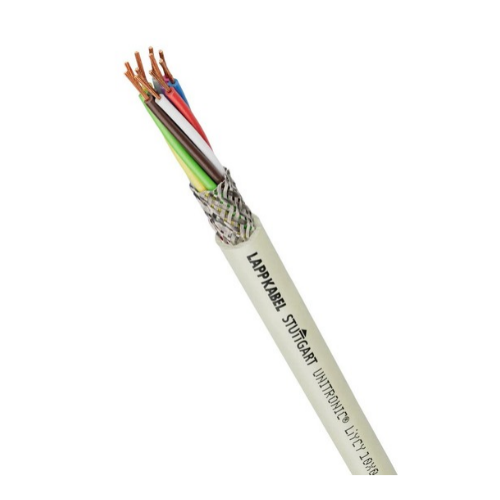
This is where industrial cables play a much bigger role than many people realize. LAPP cables are designed for demanding industrial environments where cables may experience constant movement, vibration, bending, heat, chemicals, oil, and mechanical stress. By providing dependable connections between machines and systems, they can contribute to stable and continuous manufacturing operations.
Why Cable Reliability Matters in Manufacturing
A manufacturing plant can contain hundreds or thousands of electrical and automation connections. If a critical cable becomes damaged, the resulting problem may extend beyond the cable itself. A machine could stop, an automated process may be interrupted, or an entire production section could require troubleshooting.
Unexpected downtime can affect production schedules, manpower utilization, maintenance planning, and delivery commitments. For this reason, selecting cables according to the actual operating environment is an important part of industrial system design.
LAPP offers a broad range of industrial cable and connectivity solutions designed for different applications. The appropriate cable depends on factors such as movement, installation method, temperature, electrical requirements, environmental exposure, and communication needs.
How LAPP Cables Help Support Continuous Production
1. Designed for Dynamic Applications
Many modern machines have moving components. Robotic arms, drag chains, automated handling systems, and machine tools can repeatedly bend or move connected cables.
Using a cable designed specifically for dynamic applications can help reduce premature wear caused by continuous movement. LAPP’s flexible cable solutions are available for applications where repeated bending and mechanical movement are part of everyday operation.
This is particularly important in automated manufacturing, where equipment may perform the same movement thousands of times during a production cycle.
2. Supporting Industrial Automation
Automation depends on dependable communication between controllers, sensors, drives, motors, and other equipment. A cable failure can potentially interrupt communication or power delivery and bring part of a process to a standstill.
LAPP provides solutions for power, control, data communication, and automation applications. Selecting the right cable for each connection can help create a more reliable infrastructure around automated production equipment.
3. Resistance to Challenging Industrial Conditions
Manufacturing environments are rarely gentle on electrical components. Depending on the industry, cables may be exposed to oil, coolants, dust, moisture, heat, vibration, chemicals, or mechanical stress.
Industrial cables need to be selected with these conditions in mind. Appropriate insulation, jacketing, shielding, flexibility, and mechanical characteristics can help cables perform reliably in their intended environment.
This can be especially valuable in sectors such as automotive manufacturing, machine building, food processing, material handling, and industrial automation.
4. Reliable Data Communication
Production lines increasingly depend on real-time data. Industrial networks connect PLCs, HMIs, sensors, drives, controllers, and other intelligent devices.
A reliable communication infrastructure helps these devices exchange information consistently. LAPP offers industrial data and network cable solutions designed for various automation and communication requirements.
When cables are properly matched to the network architecture and operating environment, they can form an important part of a dependable industrial communication system.
5. Helping Reduce Unplanned Maintenance
Cable damage is not always immediately visible. Repeated bending, abrasion, chemical exposure, or incorrect installation can gradually affect cable performance.
Choosing cables appropriate for the application can help reduce avoidable cable-related maintenance. It can also make maintenance teams more confident that the installed cable is suitable for the operating conditions rather than simply being a general-purpose alternative.
Key Reasons Manufacturers Consider Industrial Cable Selection Important
- Designed for demanding industrial environments
- Suitable solutions for fixed and dynamic applications
- Supports reliable power, control and data transmission
- Helps automation equipment stay connected
- Can contribute to better long-term cable reliability
LAPP Cables and the Role of Preventive Maintenance
Even high-quality industrial cables need proper installation and maintenance. Cable routing, bend radius, cable support, connectors, shielding, and environmental compatibility can all influence service life.
For example, a cable intended for continuous flexing should not be installed in a way that restricts its movement or exceeds its recommended bending conditions. Similarly, cables exposed to chemicals or oil should be selected based on the actual environmental requirements.
Regular inspection can also help identify signs of abrasion, excessive bending, loose connections, or other potential problems before they develop into an unexpected production interruption.
Choosing the Right LAPP Cable for Your Application
There is no single cable that is ideal for every manufacturing application. The right selection depends on what the cable needs to do and where it will operate.
Before choosing a cable, manufacturers should consider:
- Is the cable installed permanently or continuously moving?
- What voltage and current requirements apply?
- Is high-speed data communication required?
- Will the cable be exposed to oil, chemicals, moisture, heat, or dust?
- Is shielding required to reduce electromagnetic interference?
- What bending radius and mechanical stresses will the cable experience?
- Are specific industries or machine standards applicable?
Answering these questions can make cable selection more practical and help avoid using a cable that is unsuitable for the actual operating conditions.
Supporting the Future of Smart Manufacturing
Manufacturing is becoming increasingly connected. Robotics, automated inspection, industrial networking, machine monitoring, and data-driven production are becoming common across modern facilities.
As the number of connected machines increases, the importance of dependable cabling infrastructure also grows. Cables may not receive as much attention as robots or sophisticated control systems, but they provide the physical connections that allow these technologies to work together.
LAPP’s range of industrial cable and connectivity solutions can therefore play an important supporting role in modern manufacturing environments where reliability, flexibility, and consistent performance are essential.
Conclusion
Continuous production depends on many interconnected components, and industrial cables are one of the foundations of that system. LAPP cables can support manufacturing operations by providing solutions for power transmission, automation, data communication, and demanding dynamic applications.
The key is not simply choosing a well-known cable brand but selecting the right cable for the specific application and environment. When cable construction, installation, movement, environmental exposure, and electrical requirements are properly considered, manufacturers can build a more dependable infrastructure around their production equipment.
In an industry where every production cycle matters, reliable connections can make a meaningful difference.