

 Posted by
 Industrial facilities depend on a wide range of electrical equipment, including motors, transformers, compressors, pumps, HVAC systems, and automated machinery. These assets are essential for maintaining smooth production, and any unexpected electrical issue can result in costly downtime, expensive repairs, and reduced productivity.
While many industries focus on power availability, they often overlook the importance of maintaining a healthy power factor. A poor power factor not only increases electricity bills but also places unnecessary stress on electrical equipment. This is where Schneider APFC (Automatic Power Factor Correction) Controllers play a vital role.
Designed to continuously monitor and improve power factor, Schneider APFC Controllers help protect valuable electrical equipment, improve system reliability, and ensure efficient power utilization across industrial facilities.
What Is a Schneider APFC Controller?
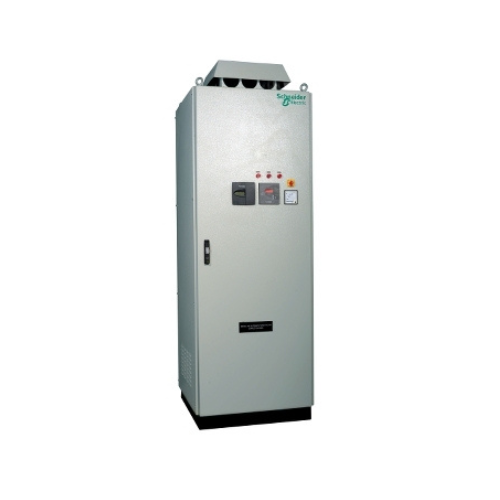
A Schneider APFC Controller is an intelligent device that automatically manages capacitor banks to maintain the desired power factor. It continuously monitors the electrical load and switches capacitors ON or OFF based on real-time requirements.
By maintaining an optimal power factor, the controller reduces reactive power, allowing electrical equipment to operate under healthier and more stable conditions.
Why Poor Power Factor Can Damage Electrical Equipment
Many industrial machines operate using inductive loads that generate reactive power. When reactive power is high, the electrical system draws more current than necessary.
This can lead to several problems, including:
- Overheating of electrical cables
- Increased transformer loading
- Motor overheating
- Higher voltage drops
- Reduced equipment efficiency
- Premature failure of electrical components
Over time, these issues increase maintenance costs and shorten the lifespan of industrial equipment.
How Schneider APFC Controllers Protect Industrial Equipment
Reduces Excess Current Flow
One of the primary functions of an APFC Controller is improving the power factor, which directly reduces unnecessary current flow within the electrical system.
Lower current means:
- Less heating in cables
- Reduced stress on switchgear
- Lower transformer loading
- Improved overall system efficiency
This helps electrical components operate within their designed limits.
Prevents Transformer Overloading
Transformers are among the most valuable assets in an industrial power system.
Poor power factor increases the current drawn from transformers, causing excessive heating and reducing operational efficiency.
Schneider APFC Controllers minimize reactive power demand, allowing transformers to deliver power more efficiently while reducing thermal stress and extending their service life.
Protects Electric Motors
Electric motors are widely used in manufacturing plants and continuously operate under varying loads.
A low power factor can increase current consumption, causing motors to overheat and reducing insulation life.
By maintaining an improved power factor, Schneider APFC Controllers help motors operate with greater efficiency, lower operating temperatures, and improved reliability.
Why Industries Choose Schneider APFC Controllers
- Reduce electrical stress by maintaining an optimum power factor automatically.
- Protect transformers, motors, and switchgear from excessive current loading.
- Improve equipment reliability while lowering maintenance costs.
- Support continuous industrial operations with stable power quality.
Minimizes Voltage Drops
Voltage fluctuations and drops can negatively affect sensitive industrial equipment.
Schneider APFC Controllers improve voltage stability by reducing unnecessary current demand across the electrical network.
Stable voltage helps ensure:
- Better machine performance
- Reduced production interruptions
- Improved accuracy of automated equipment
- Enhanced electrical system reliability
Extends the Life of Capacitor Banks
Unlike conventional capacitor switching methods, Schneider APFC Controllers intelligently manage capacitor bank operations.
This intelligent switching:
- Prevents excessive capacitor operation
- Reduces unnecessary switching cycles
- Minimizes wear and tear
- Extends capacitor bank lifespan
Efficient capacitor management contributes to lower maintenance requirements and improved system performance.
Reduces Heat Generation Across the Electrical System
Excessive heat is one of the leading causes of electrical equipment failure.
Poor power factor forces electrical components to carry additional current, generating unwanted heat throughout the distribution system.
Schneider APFC Controllers reduce this extra current, helping:
- Electrical panels remain cooler
- Cable insulation last longer
- Circuit breakers operate more efficiently
- Distribution systems perform more reliably
Lower operating temperatures directly contribute to longer equipment life.
Supports Continuous Industrial Production
Unexpected electrical failures can bring production lines to a halt, resulting in financial losses and delayed deliveries.
By maintaining a stable power factor and improving electrical system efficiency, Schneider APFC Controllers help reduce the likelihood of equipment failures caused by electrical stress.
This supports uninterrupted operations and improves overall plant productivity.
Ideal for Multiple Industrial Applications
Schneider APFC Controllers are widely used in industries where large inductive loads operate continuously, including:
- Manufacturing plants
- Textile industries
- Pharmaceutical companies
- Chemical processing units
- Food and beverage industries
- Automotive manufacturing
- Engineering workshops
- Commercial complexes
- Hospitals
- Data centers
These sectors benefit from improved equipment protection and optimized energy performance.
Long-Term Operational Benefits
Installing Schneider APFC Controllers offers several long-term advantages beyond equipment protection, including:
- Lower electricity bills
- Reduced power factor penalties
- Improved energy efficiency
- Lower maintenance expenses
- Extended equipment lifespan
- Increased operational reliability
- Better return on electrical infrastructure investments
These benefits make APFC Controllers a valuable addition to any industrial electrical system.
Conclusion
Protecting industrial electrical equipment requires more than regular maintenance—it requires maintaining a healthy and efficient power distribution system. Schneider APFC Controllers help achieve this by automatically correcting power factor, reducing excess current, minimizing electrical stress, and improving voltage stability.
By safeguarding transformers, motors, capacitor banks, cables, and switchgear, Schneider APFC Controllers not only extend equipment life but also improve operational efficiency and reduce maintenance costs. For industries aiming to enhance electrical reliability while maximizing the performance of their critical assets, Schneider APFC Controllers provide a smart, cost-effective, and future-ready solution.